Ad Fraud Observatory 2022: The Era of Residential Proxies and Cloned Browser Signatures
In 2022, bots hijacked residential home IP networks to bypass ad filters. The Adprodex Observatory analysis on proxy-based ad fraud.
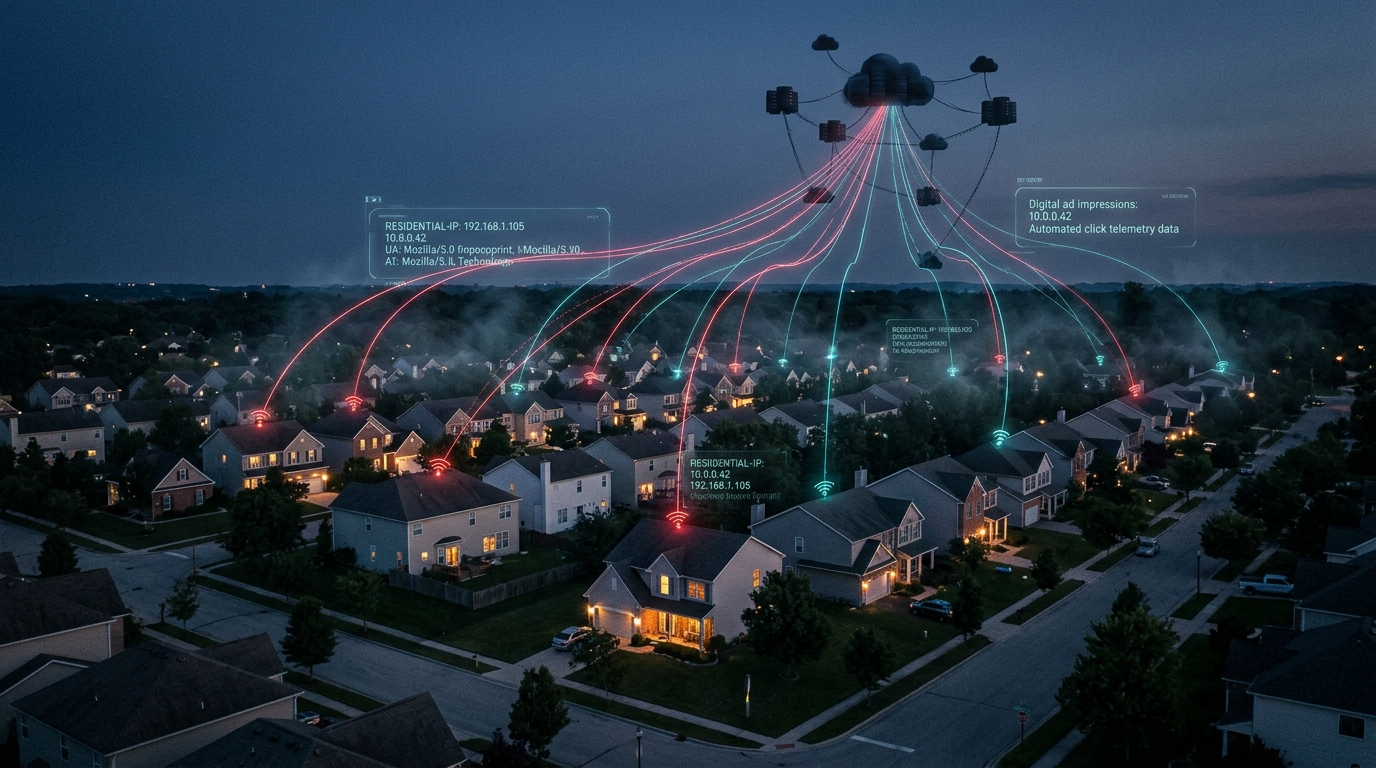
In 2022, the silent arms race between ad verification systems and cybercriminal syndicates reached a point of no return. For years, advertising platforms and fraud detection vendors assured brands they could halt fake clicks simply by blocking IP addresses originating from commercial data centers. However, in response to these basic defenses, fraud operators perfected a devastating industrial countermeasure: the widespread deployment of Residential Proxies combined with browser software signature spoofing. In this sixth installment of the Adprodex Historical Observatory, we dissect the intelligence from 2022—the pivotal year when global losses estimated by industry authorities like Juniper Research and CHEQ surpassed 65 billion dollars because bots had mastered the art of hiding inside ordinary residential Wi-Fi routers.
Hijacking domestic networks: how Residential Proxies operate
A residential proxy enables an automated script to route its internet traffic directly through the home router or mobile device of an unsuspecting private citizen. Throughout 2022, vast cyber networks—powered by malware concealed inside free VPN apps, low-cost smart TV boxes, and compromised SDKs hidden inside mobile games—converted millions of household internet connections into exit nodes for ad fraud botnets. When a bot clicks an online ad using an IP address assigned by a standard residential ISP to a family in London, Milan, or Berlin, traditional verification filters log the visit as completely authentic and legitimate.
Anti-Detect Browsers and Software Parameter Spoofing
While residential proxies masked the geographic origin of fraudulent traffic, the true game-changer of 2022 was the rapid maturation of anti-detect browsers. Fraud operators moved beyond merely masking IP addresses: they deployed profile generators capable of rewriting every passive software parameter read by websites (known as browser fingerprinting—screen resolution, WebGL graphics cards, memory profiles, time zones, installed system fonts, and credible cookie histories). Unlike physical human biometrics, these are purely text-based configuration values that a single remote server could alter at will to simultaneously simulate thousands of distinct consumers over real household connections.
The failure of local geofencing for small and medium-sized businesses
Historical intelligence aggregated by our Observatory confirms that the 2022 explosion of residential proxies hit neighborhood marketing particularly hard. Many local merchants relied heavily on geofencing—setting tight kilometer perimeters around their physical shops assuming no outsider could drain their ads. Instead, commercial proxy catalogs allowed botnets to select infected home connections down to specific postal codes and neighborhoods. Bots operating thousands of miles away seamlessly mimicked commercial intent directly inside a merchant's district, exhausting SME budgets while displaying pristine local performance metrics.
The systemic blindness of open programmatic auctions
Confronted with this dual technological convergence, 2022 sealed the structural helplessness of open ad auctions. When a bot's browser configuration and network routing mirror those of an everyday citizen, any defense relying exclusively on passive web traffic analysis hits a dead end. Ad exchanges continued collecting fees across billions of ambiguous interactions, transferring the entire financial toll of synthetic waste directly onto investing businesses.
The structural immunity of the Adprodex Closed Ecosystem
The reality of 2022 explains why Adprodex refuses to chase bots across the shifting battleground of IP addresses and browser parameters. We shut the door on anonymous web traffic by building a proprietary, closed ecosystem centered on the Tyche App. Every profile is secured through real-number telephone OTP authentication, physical hardware device binding, and native biometric access (relying on real human fingerprints or Face ID, matching modern banking apps)—physical hardware safeguards that no remote software or proxy can emulate. Ultimately, security is anchored in the real world: a residential proxy can fabricate a click from any postal code, but it cannot walk into your shop and enter a secret PIN code at the checkout counter.
Stop paying for phantom clicks disguised as local shoppers
Shield your business investments from proxy networks and synthetic user profiles. Experience verified physical transparency with Adprodex's closed ecosystem.